
How to Search Criminal Dockets
Begin at Indiana MyCase, the state's official search tool. Pick Martin Circuit Court 1, the active Odyssey label for this county. A case number is the cleanest key. Without one, a party search takes a last name plus a first name, middle name, or birth date. Attorney searches run on bar numbers. Before accepting any result, compare the court, case type, filed date, caption, and status. The service is free for the public. It caps results at 1,000, so narrow common names by court, type, status, or filing dates. The official tips note that hyphens and leading zeroes may be omitted.
- Open MyCase and select Martin Circuit Court 1.
- Choose Case, Name, or Attorney.
- Add the narrowest known fields and filters.
- Compare caption, type, date, and status.
- Open the summary and read the CCS.
When the docket search stalls, go straight to the Martin County Clerk. Call (812) 247-3651, fax (812) 247-2791, or email jfithian@martincounty.in.gov. Mail reaches PO Box 120, Shoals, IN 47581. Walk-in service is at 129 Main Street, Monday through Friday, 8:00 a.m. to 4:00 p.m. For settings and transcripts, the Circuit Court takes calls at (812) 247-3652.
Martin Criminal Case Codes
Case codes give shape to a Martin County criminal docket. The active court identifier is 51C01. Under Administrative Rule 8, felony levels run from F1 through F6, CM marks a misdemeanor, MC means miscellaneous criminal, and an infraction may carry IF. These codes classify the file. They never state the result. The rule's official view supplies the code framework behind Martin criminal docket searches.
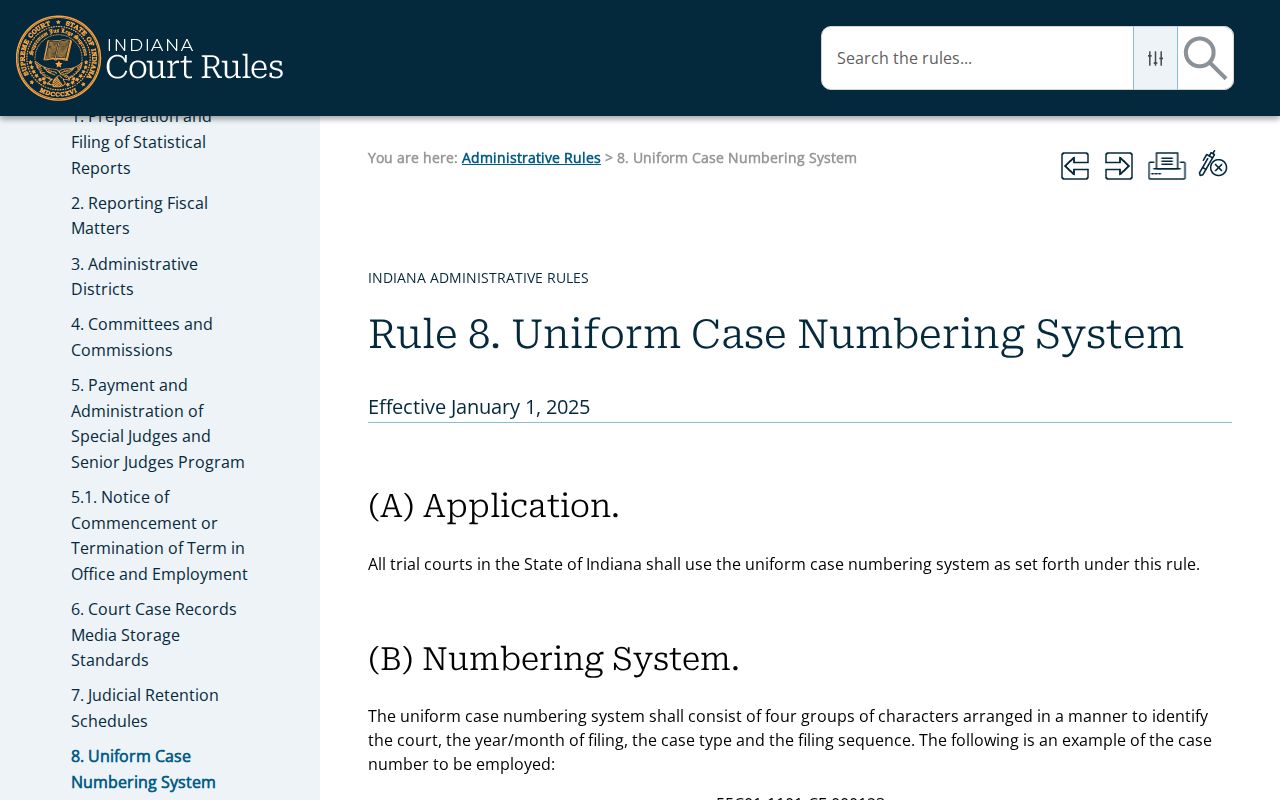
Use it to tell a court identifier and case type apart from a charge, finding, or sentence.
- CCS
- The event-by-event Chronological Case Summary.
- Charge
- An allegation, not proof of guilt.
- Disposition
- The recorded outcome of a charge or case.
- Setting
- A scheduled event that may later change.
What a Criminal Docket Shows
A Martin County criminal docket can display the caption, case number, court, type, dates, status, parties, attorneys, charges, bonds, hearings, financial entries, sentence information, and the CCS. What appears varies by file. The online view also warns that it is not the official record.
| Case header | Caption, Martin court, number, type, filed date, and status. |
|---|---|
| Charges | Offense description, statute, degree, and filing data. |
| Bond | Type, amount, date, and status when public. |
| CCS events | Dated filings, settings, orders, and results. |
| Sentence | Public terms after disposition, when available. |
Read entries with care. A motion is a request, not a ruling, and a setting is not a trial date unless the entry says so. Copy the exact words and date, then check the order or clerk file for context.
Martin County Criminal Flow
The final 2024 statistics reported 149 new misdemeanor filings. They also showed 71 miscellaneous criminal filings, plus other felony matters. Those are filing counts, not convictions. Martin Circuit Court logged 1,352 new cases of all types. It closed 1,301 dispositions, with 1,627 pending at year end. The report also appears with the Martin County criminal docket capture.
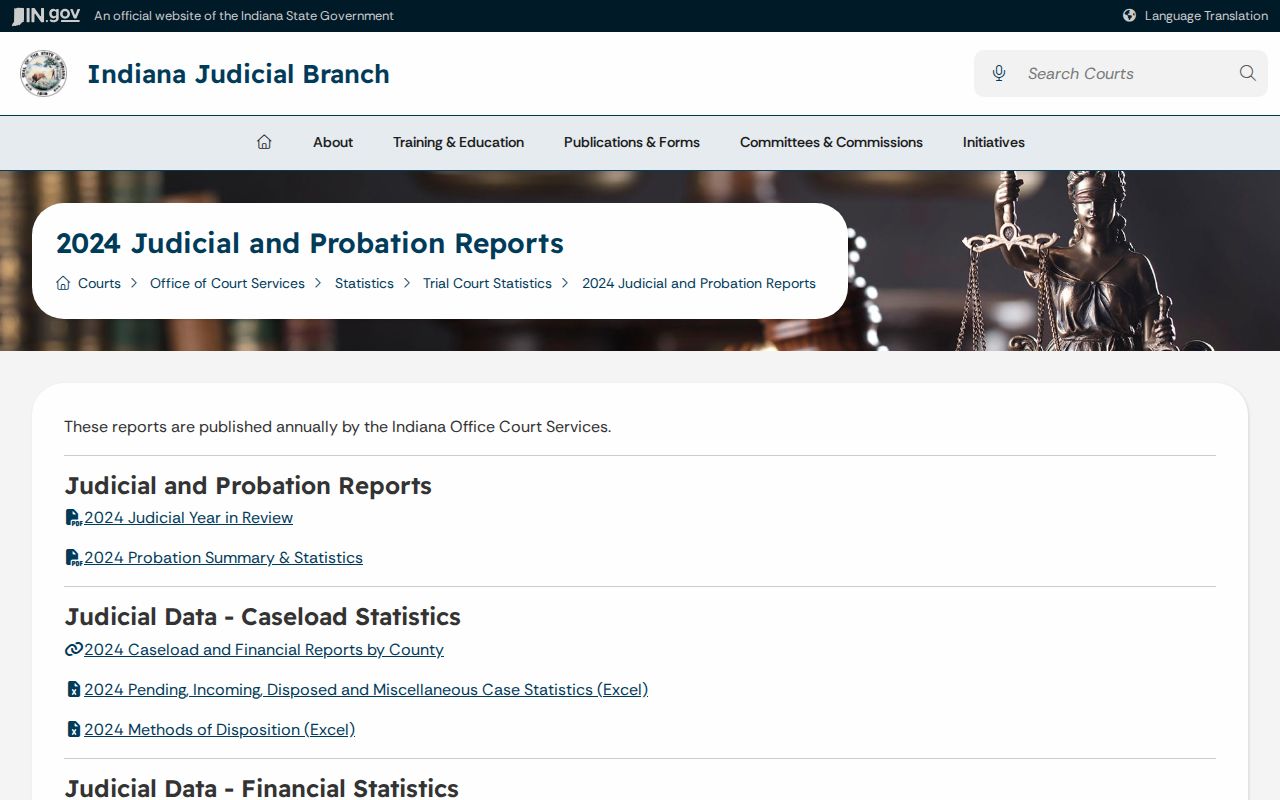
The totals explain why one Martin court handles so many case types. They say nothing about guilt, delay, or performance.
Stages on a Criminal Docket
A Martin criminal case usually follows a sequence. No two files look alike, though. Filing creates the case. An initial hearing or arraignment then covers the charge and what comes next. Pretrial entries can include counsel appearances, discovery, motions, bond action, and continuances. From there the case moves to a plea or trial. A disposition records the result, and sentencing follows when the law requires it.
Docket flow: Filing › Arraignment › Pretrial › Plea or Trial › Disposition › Sentencing
Martin local rules set ordinary prosecution discovery disclosure at 30 days after the initial hearing. That explains a discovery entry, though not every exchange becomes a public document. A reset only moves a setting. It does not dismiss a charge. For near-term hearings, try CourtCal and compare the CCS. Phone the court when a date is close, since calendar entries can shift at any time.
Martin Charges Need Context
A public Martin County criminal docket can list charges long before any final decision. A charge is only an allegation. The disposition and later CCS entries show what actually happened. Counts may be amended, dismissed, merged, pleaded, tried, or resolved another way. Trusting the first charge screen alone can mislead badly. Statistics deserve the same caution. "Disposed" is a reporting closure, not a synonym for conviction. Open does not make an allegation true. Closed does not prove every payment, appeal, or later act is finished. Follow the dated CCS, and get the final order when precision matters.
Key point: Match each charge to its disposition and verify the final order with the Martin County Clerk.
Which Court Holds Criminal Dockets
Martin Circuit Court 1 handles the county's criminal docket load. That includes felony, misdemeanor, miscellaneous criminal, infraction, and many ordinance cases. The Clerk keeps the official case file for each of them. One older identifier, 51H01, no longer exists. It belonged to the former Martin or Loogootee City Court and has been abolished. If you are chasing an old ticket or ordinance file, it may have moved and picked up a new case number. Ask the clerk to trace where it landed.
A normal appeal sits on a separate Indiana Court of Appeals docket. Federal cases run through PACER rather than MyCase. Judicial District 25 is just an administrative grouping. It is not a place to run a Martin docket search.
Administrative Rule 9 sets out how Indiana court records and public calendars are governed.
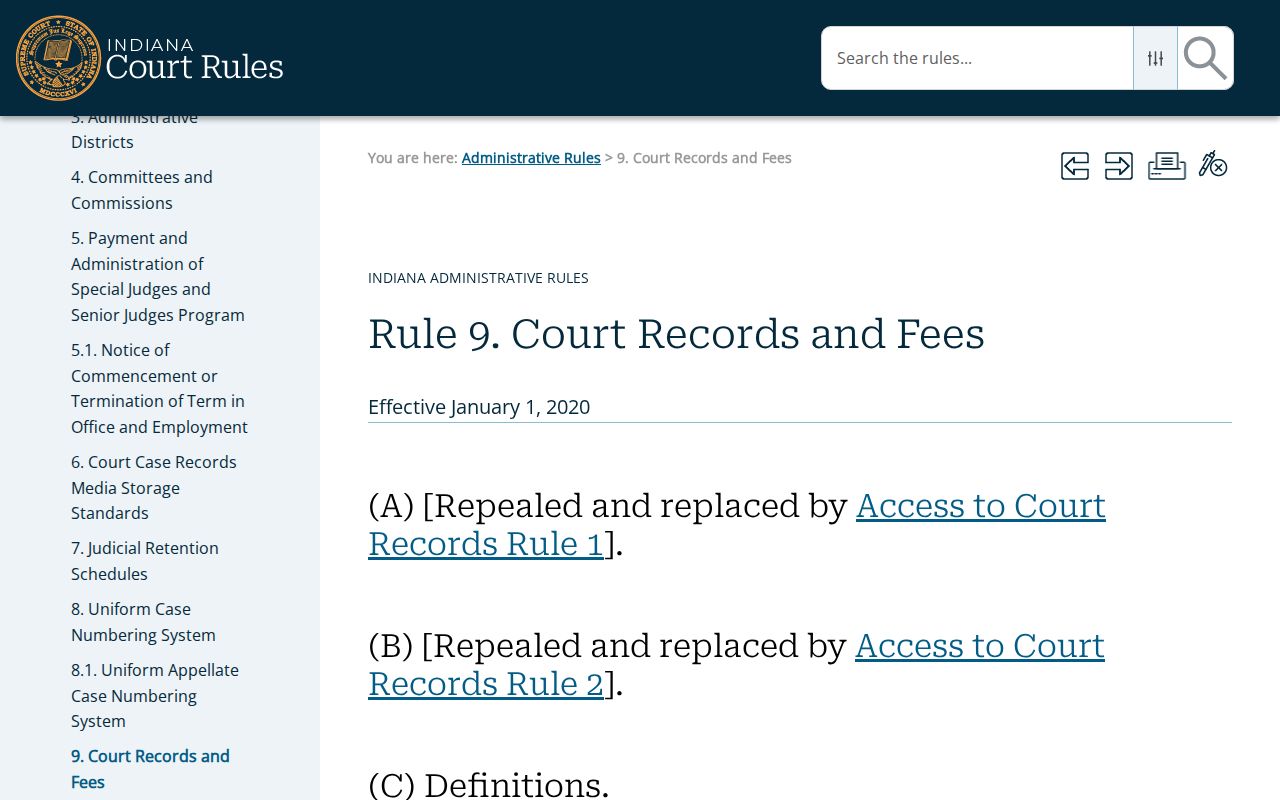
That rule explains why the public CCS, the daily calendar, and the official clerk record are three distinct sources.
Martin Criminal Documents Offline
A missing paper is not proof of a seal. Indiana treats online access differently depending on the case code. So felony files may show sentencing orders on the docket while misdemeanor files show less. Older court records may never have been converted at all. A header and the CCS can stay public even when the document itself sits only at the courthouse. That is common, not suspicious.
Before calling, copy down the case number, the CCS date, and the exact label of the item. Tell the Clerk which nonconfidential document you want. Say whether a plain or certified copy will do. Martin charges $1 per page and $3 per certification. Confirm the total, payment method, postage, and availability before you send anything. Mail, phone, fax, email, and the counter all work. One caution: Probation and Community Corrections systems are not public docket portals. Public orders may reference supervision, yet treatment and program files stay restricted.
Public Access and Sealed Criminal Dockets
Indiana leans toward openness but shields certain material. Under ACR Rule 5, account identifiers, some victim and witness information, medical material, juvenile records, and supervision files stay protected. So a public Martin criminal docket can display its header and a redacted CCS while an attached document remains confidential.
Rule 9 offers a route to restrict a record. It applies when the record is not confidential on its face. Expungement can change what MyCase shows later. And a blank result never gives you permission to work around a restriction.
Key Rules:
Indiana Access to Court Records Rules set the framework.
ACR Rule 5 identifies confidential records.
ACR Rule 9 governs access-restriction requests.
Martin Provisional Data Limits
Treat the 2025 statistics as provisional numbers, not settled fact. The court reported 1,364 new cases of all types, 1,541 dispositions, and 1,478 still pending at year end. Transfers, venue changes, later corrections, and coding choices can all shift those totals. Do not mistake them for final 2024 data. The provisional source itself appears in the Martin criminal docket capture.
Countywide flow describes the court as a whole. Only the CCS and the official file explain one case.
Martin Criminal Docket Verification
For legal proof, a MyCase screen is only a first step. Give the Martin County Clerk the case number, the exact CCS event date, and the name of the order or filing. Ask whether the public copy is complete, redacted, or certified. A request this narrow helps staff pull the right criminal docket item instead of running a broad search through protected data.
A certified copy carries the clerk's authentication. A screen capture does not. If the question is what a judge said in open court rather than what an order states, ask the Circuit Court about the reporter and transcript route. Checks like these keep a Martin criminal docket search anchored to the record the court actually created.