
How to Search Civil Dockets
Go to Indiana MyCase and pick Martin Circuit Court 1. A case number is the best search key. For a person search, enter a last name plus a first name, a middle name, or a birth date. Businesses can be found by organization name. Attorney and bar-number tabs offer one more route. Before opening a result, confirm the Martin court, the civil case type, the caption, the file date, and the status.
The public search costs nothing. It caps results at 1,000, so filter by Open, Closed, or filing date when a name is common. Civil records often lack date of birth data. A similar name alone does not make a match.
- Select Martin Circuit Court 1 in MyCase.
- Choose Case, Name, or Attorney search.
- Add the most precise known data.
- Compare the caption, code, filing date, and status.
- Read the CCS and note any missing document.
When MyCase comes up short, call the Martin County Clerk at (812) 247-3651. Fax works at (812) 247-2791. Email reaches jfithian@martincounty.in.gov. Mail goes to PO Box 120, Shoals, IN 47581, or visit 129 Main Street. Hours run Monday through Friday, 8:00 a.m. to 4:00 p.m. Ask about a public terminal search at the counter. You can also request a nonconfidential document or a certified copy. The county runs no separate portal and requires no mail form.
Martin MyCase Civil Fields
MyCase changes its case-type options depending on the court selected. Choose Martin first. Then pick the civil family that fits the record you know. Status and file dates help separate a pending dispute from an old closed file. Official search tips allow dropping hyphens and leading zeroes from a case number. A full number is still the safest key. The official MyCase search template shows the form layout. That layout is the one used for a Martin County civil docket search.
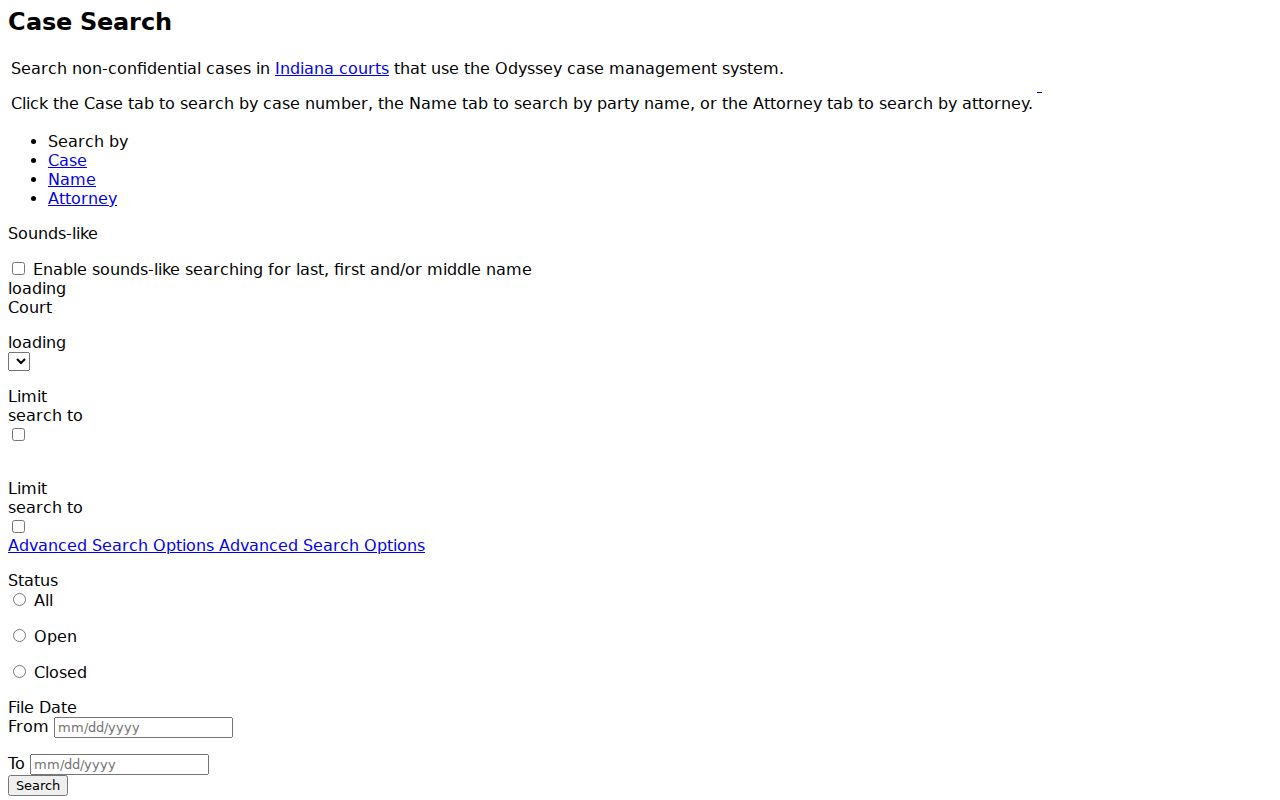
The template makes one thing clear. Choosing the right court, tab, and case type beats any wide name-only search.
| Search field | Use | Limit |
|---|---|---|
| Case Number | Known Martin civil file | 30 characters |
| Person Name | Individual party | Last plus another field |
| Business Name | Organization party | 800 characters |
| Status | All, Open, or Closed | Filter, not outcome proof |
| File Date | From and To range | mm/dd/yyyy |
What a Civil Docket Shows
A Martin County civil docket can carry a case header, parties and their roles, related cases, filed and status dates, attorneys, CCS events, hearings, financial entries, and links to some nonconfidential orders. The CCS is the dated event history. It may show a complaint, an answer, service, a motion, an order, a judgment, a satisfaction, or a later collection step. Remember, a docket line is only an index entry. Read the actual filed document or order before drawing firm conclusions.
| Case Number | Martin identifier with court, year, type, and sequence. |
|---|---|
| Parties | Plaintiff, defendant, petitioner, respondent, estate, or other roles. |
| Filings | Complaint, answer, return of service, motion, or other submission. |
| Settings | Date and hearing description, subject to later change. |
| Judgment | Decision, dismissal, money judgment, or another final order. |
Open means the system has not closed the case. It says nothing about the claim's merit. Closed does not prove a judgment was paid, and a motion is not a ruling. A judgment, in turn, is not a satisfaction.
Martin Civil Codes Explained
Indiana's civil case codes come from Administrative Rule 8. The common ones are easy to learn. CC marks civil collections, CT civil torts, PL civil plenary cases, SC small claims, and EV evictions. Family codes include DC for dissolution and DN for paternity. Probate families carry their own codes. Those cover estates, guardianships, and trusts. A code narrows your route but never summarizes the claims.
- Complaint
- The filing that begins many civil actions.
- Service
- Formal delivery of required case papers.
- Default
- A result that may follow when a party fails to respond or appear, subject to court rules.
- Proceedings supplemental
- Post-judgment steps used to seek payment.
- Satisfaction
- An entry showing that a judgment obligation has been met or released.
The Martin Clerk stocks a wide form set. It covers small claims, small claims plus eviction, proceedings supplemental, satisfaction, divorce, name change, fee waiver, and small-estate forms. A form being there does not mean every record it produces is public online.
Types of Civil Cases
Martin Circuit Court 1 is the county's one active Odyssey trial court, so its civil docket spans a broad mix. Routine money disputes sit alongside sensitive family and probate matters. Each case family carries different limits on online documents.
- Civil collection and contract claims
- Tort and general civil disputes
- Small claims and eviction-linked cases
- Dissolution, paternity, and other family cases
- Estates, guardianships, trusts, and name changes
The Indiana court forms catalog gives a current official route to statewide forms.
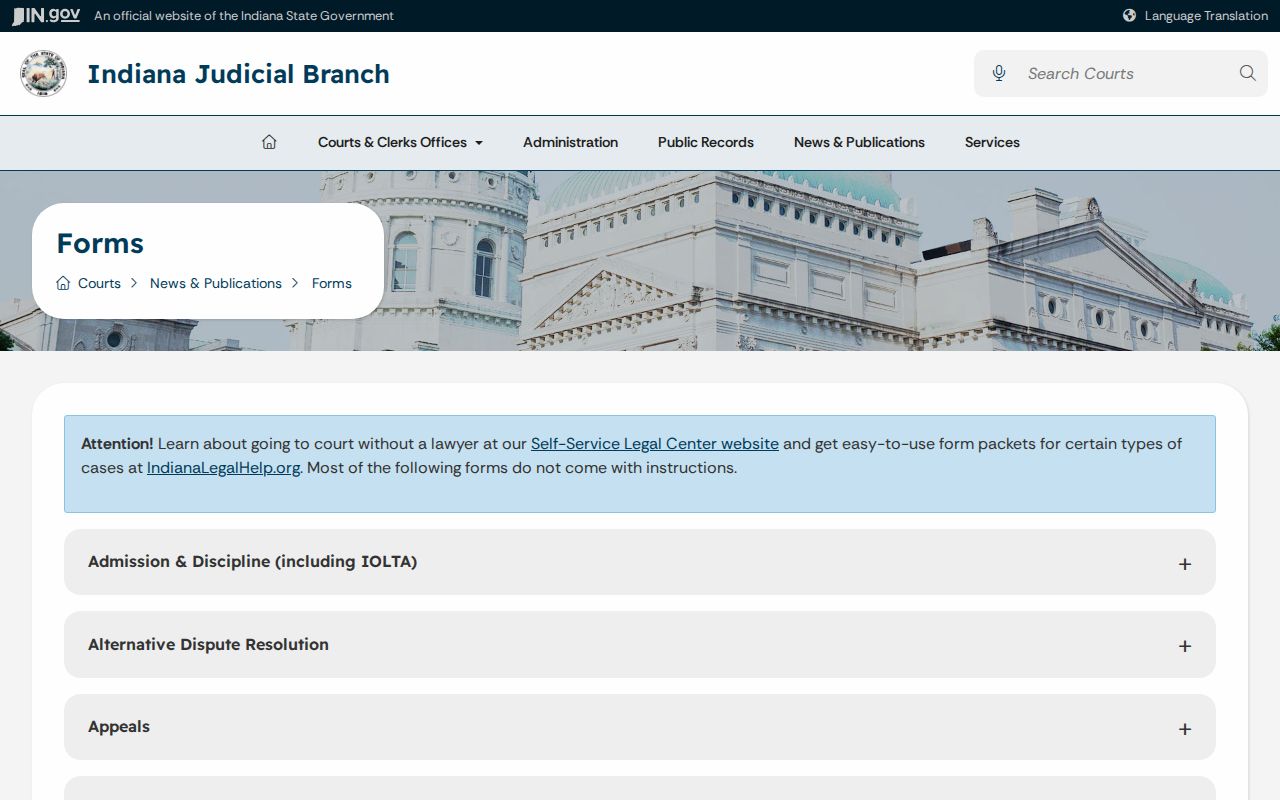
Forms can point you toward a likely case family. MyCase and the Clerk establish the actual docket and what you can access.
Martin Civil Filing Costs
The Clerk's current page posts filing and copy amounts. A civil case runs $157, divorce $177, and paternity $196. Small claims cost $97, or $87 when e-filed. Estates and guardianship run $177 each. Sheriff service adds $28. Extra defendants cost $10. Copies run $1 per page, and certification is $3 each. Fees can change. Confirm the amount and payment route before you file or order copies.
| Martin filing or service | Posted amount |
|---|---|
| Civil case | $157 |
| Divorce | $177 |
| Small claims | $97, or $87 e-filed |
| Estate or guardianship | $177 |
| Paternity | $196 |
| Copy and certification | $1 per page plus $3 each certification |
Martin local rules add a $20-per-party alternative dispute resolution fee in legal separation, paternity, and dissolution matters. That charge covers case administration only. Private mediation content stays out of the public docket.
Settings and Hearings on Civil Dockets
A Martin County civil docket setting may appear in the CCS and in CourtCal. CourtCal takes a county, an optional court, and a date. It also takes case-number or case-name text. Its window spans the prior seven days through the next four weeks. A result can show the case number, style, court, date, and time. The hearing description and judicial officer appear too. No separate courtroom field appears. The CourtCal county selector displays on the Martin civil docket page.
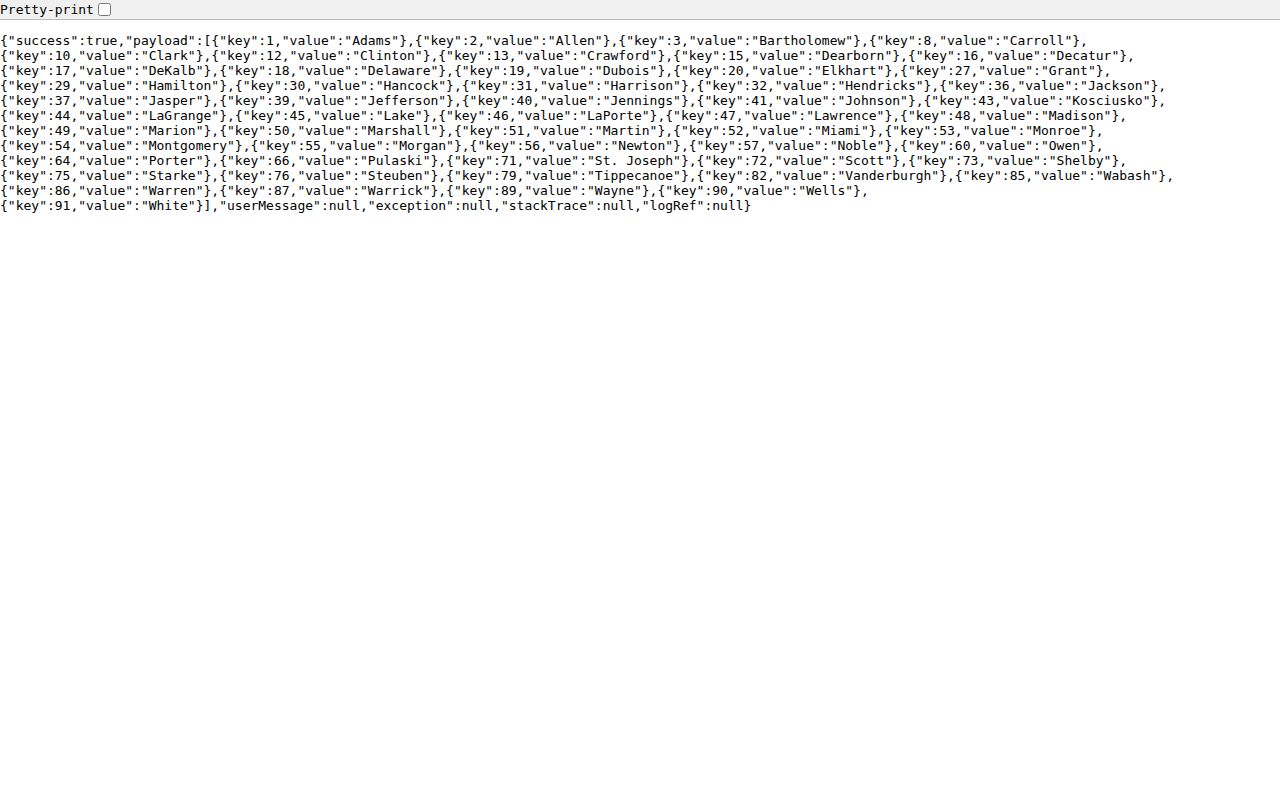
Picking the statewide calendar tells you when a Martin civil hearing sits on the schedule. It still is not the whole civil CCS. So set the calendar beside the newest CCS entries and read them together.
A continuance or reset moves the date. A cancellation kills that setting. The case itself may keep going. When a hearing is close, call the Circuit Court at (812) 247-3652 and confirm the room and current status. Administrative Rule 9 also demands daily calendars in electronic or another format. Ask the Clerk for one whenever CourtCal leaves you guessing. Confirm the hearing location before you travel, since that is a separate fact.
Martin CCS Versus Documents
Seeing a CCS online does not mean every civil filing comes with it. Indiana's access-by-case-type table splits things three ways. There is public header data, online documents, and what you must view in person. Civil collection and tort files often expose public orders and other documents. Dissolution codes usually do not put ordinary documents online. A nonconfidential item may still wait at the courthouse. Probate access shifts with the code and the document too.
Say the docket names an order, motion, or judgment you cannot pull up. Write down the case number, the CCS date, the filer, and a short description. Then ask the Clerk whether the item is public, redacted, or parked in the physical or electronic file. Ask whether it is reachable only by another route. A certified judgment is not a screen print or a case header. The Clerk can quote the copy and certification cost.
Quick answer: “No online document” can mean public at the counter, not confidential or nonexistent.
Public Access to Civil Dockets
Martin civil dockets answer to Indiana's court-record rules as well as the state public-record framework. ACR Rule 5 shields medical and treatment records, confidential addresses, financial identifiers, certain custody and parenting reports, and other listed material. One case can wear a public family or probate header. A report, inventory, or attachment can stay confidential.
The official Indiana Code, Title 5 source lays out the public-record background. It shapes access to a Martin civil docket. That covers the statutory side.
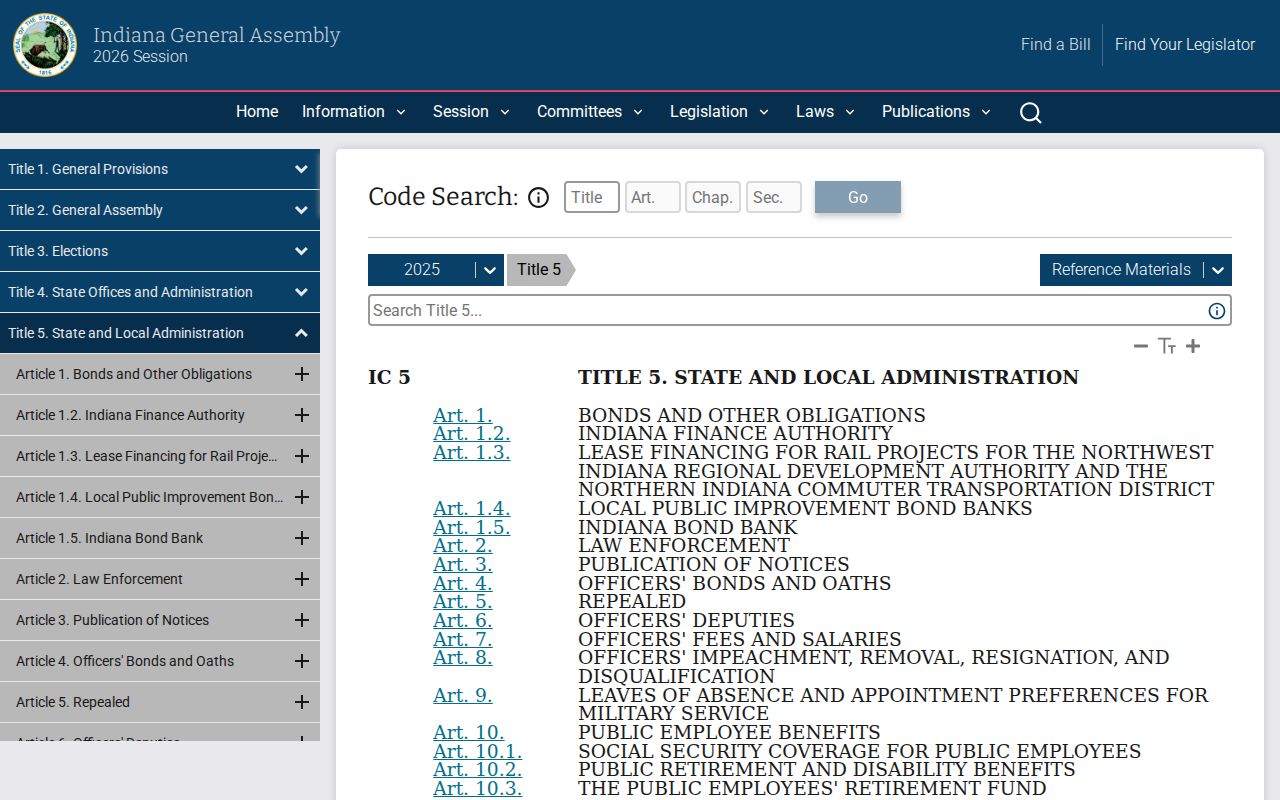
The statute works with, rather than replaces, the judiciary’s Access to Court Records Rules.
Key Rules:
Indiana Access to Court Records Rules set the court-record framework.
ACR Rule 5 defines confidential information and records.
Indiana Code Title 5 supplies general public-record law context.
Search protection-order and family matters with extra care. A protected person's name or identifiers may be left out of ordinary public search. A blank result proves nothing about whether an order exists. Ask the Clerk for a permissible public or redacted record. Never chase protected addresses, children's data, or medical reports.
Martin Civil Volume Context
Final 2024 state statistics counted 122 new civil collection filings, 44 small claims, 13 dissolutions, 11 evictions, eight torts, six civil plenary cases, and 26 paternity cases in Martin Circuit Court. These are filings, not judgments or findings of liability. Even so, the pattern is clear. Collections and small claims do heavy work on the county's civil docket.
Treat the provisional 2025 report as exactly that. It sketches later court flow, but transfers, corrections, and coding can shift the totals. For one case, the exact CCS and the official Clerk file are still what matter.
Martin Civil Docket Certification
MyCase can name the judgment date and title, but a certified judgment it is not. Hand the Martin County Clerk the case number and the exact CCS entry. Request the public judgment in plain or certified form. Before mailing a request, nail down page count, certification, postage, and accepted payment.
The same focused process covers orders and pleadings. If the item holds protected data, the office may issue a redacted public copy. When no online link shows up, try clerk review. It is the dependable way to tell an offline public civil docket document from a confidential one.